
 Recommended On

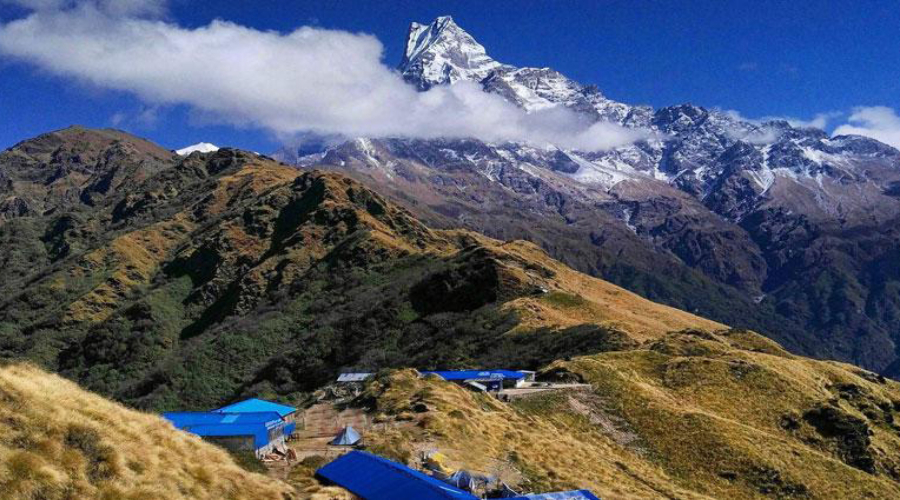
The Ghorepani Poon Hill Trek is a 3 to 5 day route in the Annapurna region of Nepal that reaches Poon Hill at 3,210 meters for sunrise views of Annapurna I (8,091 m), Dhaulagiri (8,167 m), and Machapuchare (6,993 m). It is one of the most popular short treks in Nepal and suits beginner trekkers with average fitness.
The route starts at Nayapul (1,070 m), climbs through rhododendron forest and Gurung and Magar villages to Ghorepani (2,874 m), continues to the Poon Hill sunrise viewpoint, then descends via Ghandruk back to Nayapul. Tea-house accommodation is available at every stop. The entire route lies within the Annapurna Conservation Area, so both an ACAP permit and a TIMS card are required before starting.
Pokhara is the base for this trek. Nayapul is 62 kilometers from Pokhara by road, approximately 1.5 to 2 hours by jeep or local bus.
Overview: Why Do the Ghorepani Poon Hill Trek?
The Ghorepani Poon Hill Trek gives trekkers close-up views of the Annapurna and Dhaulagiri ranges within 3 to 5 days from Pokhara, without the length, cost, or technical demands of longer Annapurna routes. The highest point is Poon Hill at 3,210 meters, which keeps altitude risk low and the route accessible for most healthy adults.
This is a well-established trekking route with reliable trail infrastructure. Tea-house lodges, clear paths, and regular foot traffic make independent trekking straightforward. The Annapurna Ghorepani trek also works as a warm-up before longer routes like Annapurna Base Camp or Mardi Himal Trek if you have more time available.
The main draw is the Poon Hill sunrise panorama. On a clear morning, the view from a single hilltop inside the Annapurna Conservation Area covers Dhaulagiri, Annapurna I, Annapurna South, Gangapurna, and Machapuchare.
Highlights of the Ghorepani Poon Hill Trek
Sunrise at Poon Hill
Poon Hill at 3,210 meters is the primary viewpoint of the Ghorepani Poon Hill Trek. The sunrise view covers Dhaulagiri (8,167 m), Annapurna I (8,091 m), Annapurna South, Gangapurna, and Machapuchare (6,993 m). The viewpoint has a watchtower and signboards marking the elevation of each visible peak.
Trekkers leave Ghorepani at around 4:00 AM with headlamps to reach the summit before dawn. The climb from Ghorepani to Poon Hill takes 45 to 60 minutes on a steep but short trail of approximately 1.5 kilometers. Arrive at least 30 minutes before sunrise to secure a good position. In winter, the summit carries 5 to 10 centimeters of snow, so boots with grip are important.
Rhododendron Forests and Mountain Views
The trail between Ulleri and Ghorepani passes through a rhododendron forest that blooms red and pink from late February through April. Outside bloom season, the forest is dense green and provides shade on the uphill sections.
The Annapurna foothills rhododendron forest is most extensive between 2,000 and 2,874 meters on the ascent to Ghorepani. This section also has the highest density of Himalayan bird species on the route, including the Himalayan monal. The Annapurna Conservation Area protects this forest corridor. Stay on marked trails throughout.
Gurung and Magar Villages
The poon hill trek passes through Ulleri, Ghorepani, Tadapani, and Ghandruk. Ghandruk is a large Gurung community village with stone-paved lanes, a Gurung Heritage Museum, and direct views of Annapurna South. It is the most developed village on the route for tourism.
Ulleri is a predominantly Magar village at the top of the famous stone staircase. Ghorepani is the highest settlement on the standard route and serves as the base for the Poon Hill sunrise hike. Each village has tea-house lodges, food, and basic facilities. The Gurung Heritage Museum in Ghandruk covers local history, traditional dress, and community culture.
Ghorepani Poon Hill Trek Itineraries
3-Day Short Ghorepani Poon Hill Trek
The short ghorepani poon hill trek compresses the itinerary by using a jeep transfer from Pokhara to Tikhedhunga or Ulleri on Day 1. This reduces walking on the first day but makes the overall itinerary more demanding. It suits fit trekkers with limited time.
Day 1: Jeep transfer from Pokhara to Tikhedhunga or Ulleri (road condition dependent), then trek to Ghorepani, 4 to 5 hours. Day 2: Sunrise hike to Poon Hill, return to Ghorepani, trek to Ghandruk, 6 to 7 hours total. Day 3: Ghandruk to Nayapul, 5 hours, drive to Pokhara.
This option is not recommended for first-time trekkers or those who have not prepared with uphill training. The combination of the Ulleri staircase and the full Ghorepani climb on Day 1 is physically demanding without prior conditioning.
4-Day Ghorepani Poon Hill Trek
The 4-day Ghorepani Poon Hill Trek is the most common itinerary. It starts and ends at Nayapul, covers approximately 50 to 55 kilometers, and includes the Poon Hill sunrise hike on Day 3. This itinerary suits trekkers of average fitness with no prior high-altitude experience.
Day 1: Drive from Pokhara to Nayapul (1,070 m), 1.5 to 2 hours. Trek from Nayapul to Tikhedhunga (1,540 m), 3 to 4 hours. The trail follows the Modi Khola river valley through Birethanti. Overnight at Tikhedhunga.
Day 2: Trek Tikhedhunga to Ghorepani (2,874 m), 5 to 6 hours. The trail climbs steeply through Ulleri (1,960 m) via approximately 3,000 stone steps, gaining 510 meters. After Ulleri, the forest trail continues to Ghorepani, gaining a further 824 meters. This is the hardest day. Overnight at Ghorepani.
Day 3: Leave Ghorepani at 3:30 to 4:00 AM for the Poon Hill sunrise hike (3,210 m), 45 to 60 minutes from the village. Return to Ghorepani for breakfast, then trek to Tadapani (2,630 m) or Ghandruk (1,940 m), approximately 10 to 12 kilometers in 5 to 6 hours. Overnight at Ghandruk.
Day 4: Trek from Ghandruk to Nayapul, approximately 14 kilometers in 4 to 5 hours downhill. Drive back to Pokhara.
5-Day Trek with Jhinu Danda Hot Springs
The 5-day version of the Ghorepani Poon Hill Trek adds a stop at Jhinu Danda (1,780 m) after Ghandruk. Jhinu Danda is known for its natural hot springs on the Modi Khola river, which are a practical rest stop after 4 days of uphill and downhill trekking.
Day 4: Trek from Ghandruk to Jhinu Danda, 4 to 5 hours. The natural pools along the river sit at approximately 35 to 40 degrees Celsius. Entry to the hot springs costs a small fee. Day 5: Trek Jhinu Danda to Nayapul, 2 to 3 hours, then drive to Pokhara.
This is the most relaxed version of the ghorepani poon hill trek and is popular during autumn when Ghandruk lodge prices and crowd levels are at their peak.
Distance, Elevation, and Navigation
Trekking Distance Per Day
Total walking distance for the 4-day Ghorepani Poon Hill Trek is approximately 50 to 55 kilometers. Daily distances range from 10 to 14 kilometers with 4 to 6 hours of walking per day, excluding rest stops and the early morning Poon Hill summit hike.
Daily breakdown:
-
Nayapul to Tikhedhunga: 10 km, 3 to 4 hours
-
Tikhedhunga to Ghorepani: 12 km, 5 to 6 hours
-
Ghorepani to Poon Hill and Ghandruk: 10 to 12 km, 6 to 7 hours including summit
-
Ghandruk to Nayapul: 14 km, 4 to 5 hours
These are average figures. Pace depends on fitness level, load, and trail conditions. The poon hill trek distance is manageable for trekkers with basic walking fitness.
Elevation Gain and Altitude
Total elevation gain from Nayapul (1,070 m) to Poon Hill (3,210 m) is 2,140 meters. The steepest single-day gain is on Day 2 from Tikhedhunga (1,540 m) to Ghorepani (2,874 m), a climb of 1,334 meters in one trekking day.
Poon Hill's altitude is 3,210 meters. This is moderate by Himalayan standards. The highest sleeping altitude is Ghorepani at 2,874 meters, which is well within safe acclimatization range for a standard 4-day pace.
For navigation, carry a downloaded offline map on your phone via Maps.me or Gaia GPS before departing Pokhara. The ghorepani poon hill trek map is available on both platforms. Trail signage is reliable in the lower sections but can be sparse near the Poon Hill summit junction above Ghorepani. A GPS track removes any navigation uncertainty on this section.
Villages and Local Culture
Ulleri Village
Ulleri (1,960 m) is a Magar village above Tikhedhunga, reached by climbing approximately 3,000 stone steps that gain 510 meters in elevation. The stone staircase at Ulleri is the steepest single section of the Ghorepani Poon Hill Trek and takes most trekkers 2 to 3 hours from Tikhedhunga.
Tea shops at the top of the staircase provide a natural break point. Ulleri has several tea-house lodges for overnight stays if you want to split Day 2 into two shorter days. The village marks the beginning of the rhododendron forest section leading up to Ghorepani.
Ghorepani Village
Ghorepani (2,874 m) is the main overnight stop before the Poon Hill sunrise hike and the gateway to Poon Hill for all standard itineraries. The village has 20 to 30 tea-house lodges, hot shower facilities, and consistent food service throughout the trekking season.
At 2,874 meters, Ghorepani is the highest sleeping altitude on the standard poon hill trek. Temperatures at night drop to near zero in October and November and below minus 5 degrees Celsius in winter. Carry warm layers for the early morning Poon Hill hike. The village also has a small viewpoint near the lodges with mountain views, though Poon Hill itself offers the full panorama.
Ghandruk Village
Ghandruk (1,940 m) is one of the largest Gurung community villages in the Annapurna region and the most common final overnight stop on the Ghorepani Poon Hill Trek. It has stone-paved streets, reliable tea-house lodges, and clear views of Annapurna South and Machapuchare.
The Gurung Heritage Museum in Ghandruk covers the history and culture of Gurung communities in the Annapurna foothills. Entry requires a small fee. The village is well connected to Nayapul by trail and provides the most comfortable accommodation on the lower section of the route. Many trekkers find Ghandruk more comfortable than Ghorepani for a final night stop.
Ghorepani Poon Hill Trek Difficulty
Trek Difficulty
The Ghorepani Poon Hill Trek is rated moderate difficulty. The trail requires no technical skills, and the highest point is 3,210 meters. The main challenge is the sustained elevation gain on Day 2, which involves 1,334 meters of uphill in a single trekking day.
The Ulleri stone staircase is the steepest section and takes 2 to 3 hours for most trekkers. The forested climb from Ulleri to Ghorepani adds another 3 to 4 hours of continuous uphill. These two sections back-to-back make Day 2 the hardest day on the ghorepani poon hill trekking route.
The poon hill trek for beginners is achievable with preparation. Any adult who can walk 5 to 6 hours per day on uneven terrain with moderate fitness can complete the 4-day itinerary. The difficulty is physical endurance on Day 2, not altitude or navigation complexity.
AMS and Acclimatization
Acute Mountain Sickness (AMS) is uncommon on the Ghorepani Poon Hill Trek because the maximum sleeping altitude is 2,874 meters at Ghorepani. Mild symptoms such as headache or fatigue can appear above 2,500 meters but typically resolve with rest and hydration at the same altitude.
Standard altitude acclimatization precautions apply. Drink 3 to 4 liters of water per day. Avoid alcohol above 2,000 meters. Do not ascend to the next camp if you have an unresolved headache or nausea. If symptoms worsen after rest, descend and seek assistance. The 4-day itinerary provides adequate time for natural acclimatization at this elevation.
AMS symptoms requiring immediate descent: severe headache not resolved by rest, vomiting, difficulty breathing at rest, and loss of coordination. These are uncommon at Poon Hill altitude but should not be ignored.
Fitness Preparation
Trekkers should be able to walk 5 to 6 hours per day on uphill terrain before starting the Ghorepani Poon Hill Trek. The most effective preparation is stair climbing and hill walking for 4 to 6 weeks before departure.
Trekkers who spend most of their time on flat terrain typically find the Ulleri staircase harder than expected. Training specifically on steps or inclined surfaces makes a practical difference on Day 2. No altitude training is required for Poon Hill's elevation range. A comfortable daypack of 8 to 12 kilograms and well-worn trekking boots reduce trail fatigue significantly.
Best Time for the Ghorepani Poon Hill Trek
Autumn Season
October and November are the best months for the Ghorepani Poon Hill Trek. Post-monsoon skies are clear, mountain views from Poon Hill are sharp, and trail conditions are dry and firm. Daytime temperatures at Ghorepani in October average 10 to 15 degrees Celsius. Nights drop to near freezing.
This is the busiest trekking season in Nepal. Tea-house lodges in Ghorepani and Ghandruk fill during the peak October weeks. Booking accommodation in advance during mid-October is advisable. September can be included in the autumn window but carries some residual monsoon cloud, particularly in the afternoons.
Spring Rhododendron Season
March, April, and early May are the second-best trekking season for the Ghorepani Poon Hill Trek. The rhododendron blooms along the Ulleri to Ghorepani trail are at peak color from mid-March through April, and mountain views are clear on most mornings.
Spring daytime temperatures are warmer than autumn, averaging 15 to 20 degrees Celsius at Ghorepani. Mountain weather in spring is generally stable in the mornings, with cloud build-up increasing in the afternoons. The rhododendron blooms are the primary reason to prefer spring for this route. Complete the trek before the third week of May to avoid pre-monsoon visibility issues.
Winter and Monsoon Conditions
December, January, and February are viable months for the Ghorepani Poon Hill Trek but require preparation for cold conditions. Night temperatures at Ghorepani drop below -5 degrees Celsius in winter. Poon Hill can have 5 to 10 centimeters of snow. Tea-house lodges stay open throughout winter, and trail traffic is minimal.
Winter days are often clear with good mountain visibility. The Ulleri staircase can be icy in January and February. Micro-spikes are useful but not always required. Check trail conditions with your operator before departure in winter.
Monsoon season runs from June through mid-September. Heavy rain makes trails slippery, leeches are present below 2,500 meters, and cloud cover limits views from Poon Hill on most days. The Ghorepani Poon Hill Trek is not recommended in June, July, or August.
Permits, Cost, and Transport
ACAP and TIMS Permit
The Ghorepani Poon Hill Trek requires 2 permits before entering the trail: the Annapurna Conservation Area Permit (ACAP) and the Trekkers' Information Management System (TIMS) card. Both are checked at the Birethanti checkpoint at the start of the route.
ACAP permit cost for foreign nationals in 2026: approximately USD 30 per person. TIMS card cost: approximately USD 20 per person. Both are issued at the Nepal Tourism Board office in Pokhara or Kathmandu. Bring 2 passport-size photos and your passport for the application process. SAARC nationals pay a reduced rate. Permits cannot be arranged on the trail.
World Expedition Nepal handles ACAP and TIMS permit applications as part of all guided trek packages, removing the need to visit the permit office independently.
Trek Cost Breakdown
The total cost of the Ghorepani Poon Hill Trek ranges from approximately USD 200 to USD 500 per person, depending on guide, porter, and package inclusions. Independent trekking without a guide costs less but requires arranging all logistics, permits, and transport independently.
Approximate costs for independent trekking:
-
ACAP + TIMS permits: USD 50 per person
-
Tea-house accommodation: USD 5 to 15 per night
-
Meals at tea-house lodges: USD 15 to 25 per day
-
Pokhara to Nayapul shared jeep: USD 5 to 10 per person
-
Porter (if needed): USD 15 to 20 per day
A guided ghorepani poon hill trek package from World Expedition Nepal covering transport, permits, guide, and tea-house accommodation ranges from USD 250 to USD 450 for the standard 4-day itinerary.
Pokhara to Nayapul Transport
Nayapul (1,070 m) is the standard trailhead for the Ghorepani Poon Hill Trek and is located 62 kilometers from Pokhara. Shared jeeps and local buses run from Pokhara's Baglung bus park to Nayapul daily. Journey time is 1.5 to 2 hours.
Shared jeep cost: approximately USD 5 to 8 per person. Private jeep hire: USD 40 to 60 per vehicle, one way. The road is paved and passable year-round in normal conditions. Most trekking packages include private jeep transport both ways.
Pokhara can be reached from Kathmandu by a 25-minute domestic flight or a 7 to 8-hour tourist bus. Tourist buses depart from Thamel in Kathmandu and arrive near Pokhara's lakeside area.
Accommodation and Food on the Trek
Tea-house lodges are available at Tikhedhunga, Ulleri, Ghorepani, Tadapani, Ghandruk, and Jhinu Danda. Accommodation is basic with shared rooms and local bedding. Meals, hot showers, and phone charging are available at most stops.
Room costs at tea-house lodges are typically free to USD 5 per night when eating at the same lodge, or USD 10 to 15 if booked independently. Most lodge pricing is structured around meal revenue. Eating at the lodge where you sleep is the standard arrangement on this route.
Food available on the trail includes dal bhat (rice, lentil soup, vegetable curry), noodle soup, fried rice, pasta, oatmeal, and eggs. Dal bhat costs approximately USD 4 to 6 with unlimited refills and is the most reliable and filling option. Hot drinks, including tea, coffee, and lemon honey ginger, are available at all stops.
Drinking water must be purified. Use purification tablets or a water filter rather than buying bottled water, which costs USD 2 to 4 per bottle above 2,000 meters. Mobile charging is available at most lodges for a small fee. Wi-Fi is available in Ghorepani and Ghandruk at some lodges, but do not rely on it for navigation.
What to Expect on the Trail
On the Ghorepani Poon Hill Trek, trekkers move through terraced farmland, pine and rhododendron forest, and open ridgeline terrain on alternating days. Trail conditions vary by season: dry and firm in autumn, muddy after rain, and icy on the Ulleri staircase in winter.
Scenery changes noticeably with altitude. The lower sections from Nayapul to Tikhedhunga pass through the river valley farmland. The climb to Ghorepani moves through dense forest. Above Ghorepani, the trail opens onto the ridgeline with mountain views in clear weather.
Mobile coverage is patchy above Tikhedhunga and unreliable above Ghorepani. Wi-Fi is available at some lodges in Ghorepani and Ghandruk, but speeds are slow. Do not depend on connectivity above the lower trail sections for navigation or emergency communication.
Villages along the route are inhabited by Gurung and Magar communities. Trekkers pass through working villages, not tourist-only settlements. Respect local customs, ask before photographing people, and purchase from local shops where possible. Small handicrafts, clothing, and souvenirs are available in Ghorepani and Ghandruk.
For the Poon Hill sunrise hike, leave Ghorepani at 3:30 to 4:00 AM. Carry a headlamp, warm layers including a down jacket, and a hot drink in a flask. The summit trail is 1.5 kilometers and steep. In winter, the top section can have 5 to 10 centimeters of snow. Boots with grip are more reliable than trail runners in these conditions.
Why Trek with World Expedition Nepal
World Expedition Nepal is a Pokhara and Kathmandu-based trekking operator that arranges guided Ghorepani Poon Hill Trek packages including guide and porter service, ACAP and TIMS permit handling, tea-house bookings along the route, and transport coordination between Pokhara and Nayapul.
For first-time trekkers, using a local operator removes the logistics burden of permit applications, transport arrangements, and accommodation booking in advance. A guide from World Expedition Nepal provides route knowledge on steep sections like the Ulleri staircase, contacts at tea-house lodges, and local support throughout the trek.
Independent trekkers who are comfortable with self-navigation, permit arrangements, and independent logistics can complete the Ghorepani Poon Hill Trek without an operator. For those who want a straightforward, well-organized experience, a guided package is the more reliable option.
World Expedition Nepal offers the standard 4-day Ghorepani Poon Hill Trek, the 5-day version with Jhinu Danda, and extended itineraries combining Poon Hill with Mardi Himal or Annapurna Base Camp. Contact details and package pricing are available at worldexpeditionnepal.com.
FAQs: Ghorepani Poon Hill Trek
Is the trek suitable for beginners?
Yes. The Ghorepani Poon Hill Trek is ideal for beginners, with a maximum altitude of 3,210 meters, well-marked trails, tea houses, and moderate daily walking of 5–6 hours.
What is the highest point?
Poon Hill at 3,210 meters is the highest point, while Ghorepani village at 2,874 meters is the highest overnight stop, both at moderate altitude levels.
Do I need a guide or porter?
A guide is optional, but porters cost USD 15–20 per day. Hiring supports locals, and agencies like World Expedition Nepal provide experienced guides for navigation and permits.
How many days does the trek take?
The trek usually takes 4 days from Pokhara, with 3-day fast and 5-day relaxed options depending on the itinerary and travel preferences.
Can I see Everest from Poon Hill?
No. Everest is not visible. Poon Hill offers panoramic views of the Annapurna and Dhaulagiri ranges, including Machapuchare and Annapurna I.
What permits are needed for the trek?
You need an ACAP (USD 30) and a TIMS card (USD 20), both mandatory and checked at entry points like Birethanti before starting the trek.
